
In this article:
- Opening Answer
- Pricing Models
- Contingency vs Fixed
- ROI Comparison
- Why Expertise Matters
- When It Makes Sense to Hire a Consultant
- FAQ
Opening Answer
SR&ED consultant costs in Canada typically range from 10% to 30% of your claim under a contingency model, or from $5,000 to $25,000 or more under a fixed-fee model, depending on complexity.
But the real question is not cost. It is net return.
A properly structured claim can increase your refund by 20% to 50% or more compared to a basic or DIY filing. For example, a company expecting $80,000 might recover $110,000 or more after proper scoping, documentation, and cost capture, making the consultant fee a net gain rather than a cost.
The difference comes down to how well your claim aligns with Canada Revenue Agency (CRA) expectations.
Pricing Models
There are two primary pricing models in Canada.
1. Contingency-Based Pricing
- Typically 10% to 30% of the claim value
- No upfront cost
- Fee is paid only if the claim is successful
2. Fixed Fee Pricing
- Typically $5,000 to $25,000 or more
- Based on scope and complexity
- Paid regardless of claim outcome
3. Hybrid Models
- Lower upfront fee plus reduced contingency
- Used for larger or ongoing clients
What Affects Pricing
- Claim size
- Number of projects
- Documentation quality
- Industry complexity, such as software versus manufacturing
- First-time versus repeat claim status
Learn how this fits into your overall claim on our SR&ED services page.
Contingency vs Fixed
This depends on your situation.
Contingency Model
This is often best for most companies.
Pros:
- No upfront risk
- Aligned incentives, because the consultant gets paid when you do
- Ideal for first-time claimants
Cons:
- Higher total fee percentage
- Can become expensive for large claims
Fixed Fee Model
This is often best for experienced claimants.
Pros:
- Lower cost at scale
- Predictable pricing
Cons:
- Paid regardless of outcome
- Less incentive alignment
Practical Insight
Most early-stage and mid-market companies choose contingency because it reduces risk and helps ensure the consultant is focused on maximizing the claim.
ROI Comparison
The biggest mistake is evaluating consultants based on cost alone.
Scenario Comparison
DIY Filing
- Estimated claim: $200,000
- Actual recovery: $120,000 because the claim was under-claimed
Consultant-Assisted Claim
- Optimized claim: $200,000
- Recovery: $200,000
- Fee at 20%: $40,000
- Net result: $160,000
$40,000 more than DIY, even after fees.
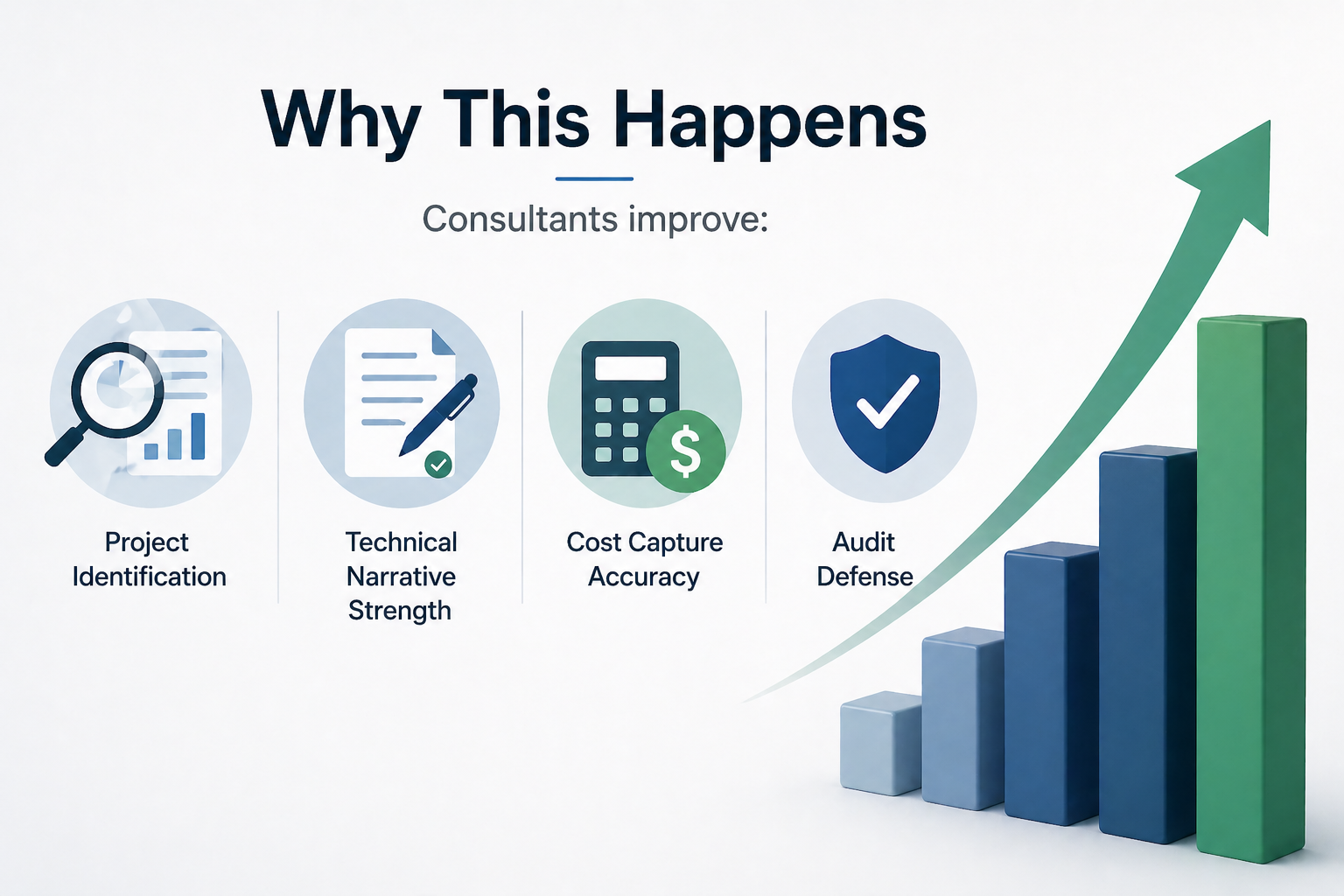
Why This Happens
Consultants improve:
- Project identification
- Technical narrative strength
- Cost capture accuracy
- Audit defense
See real outcomes in our case studies.
Why Expertise Matters
Not all SR&ED consultants are equal.
What High-Quality Advisors Do
- Identify hidden eligible work
- Structure claims to meet CRA criteria
- Align technical and financial narratives
- Prepare for audits proactively
What Low-Quality Advisors Do
- Use generic templates
- Over-claim, increasing audit risk
- Under-document, reducing claim value
The Risk of Choosing Based on Price
Cheaper providers often lead to:
- Reduced claims
- Higher audit risk
- More internal time required
Real Insight
From our experience across industries, the difference between a strong and weak consultant often exceeds $50,000 or more per claim.
When It Makes Sense to Hire a Consultant
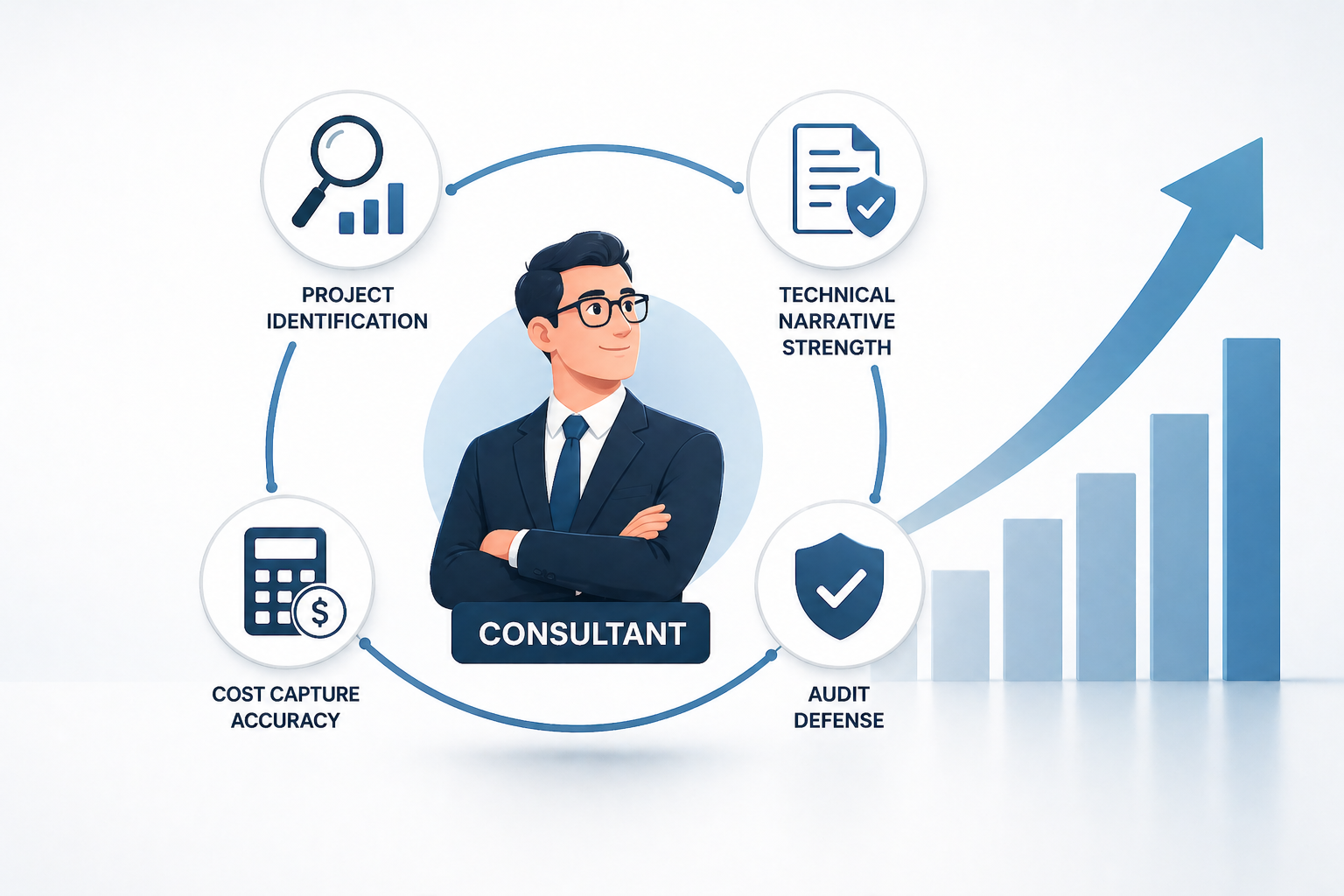
You should strongly consider it if:
- This is your first SR&ED claim
- You are unsure what qualifies
- Your claim is $50K or more
- You lack internal documentation structure
- You want to reduce audit risk
When DIY Might Work
DIY might work for:
- Very small claims under $20K
- Teams with strong internal technical and tax expertise
- Simple, well-documented projects
The Hidden Cost Most Companies Miss
The biggest cost is not the consultant fee. It is what you fail to claim.
We regularly see companies:
- Missing 20% to 40% of eligible work
- Using weak technical narratives that reduce claims
- Creating avoidable audit issues
FAQ
How much does an SR&ED consultant cost in Canada?
Typically 10% to 30% contingency or $5,000 to $25,000 or more as a fixed fee, depending on complexity.
Is contingency pricing worth it?
For most companies, yes, especially first-time claimants, because it reduces risk and aligns incentives.
Can I file SR&ED myself?
Yes, but many companies under-claim or increase audit risk without proper expertise.
Do consultants increase claim size?
Often significantly, by identifying more eligible work and improving documentation.
What should I look for in an SR&ED consultant?
Experience, technical understanding, documentation quality, and audit support, not just price.
Next Step
Most companies focus on what an SR&ED consultant costs.
The better question is how much they are leaving unclaimed without one.
We regularly uncover:
- Additional eligible projects
- Missed labour costs
- Documentation gaps reducing claim value
A quick assessment can show your true claim potential before you decide how to file.